Sept 23: ETF Inflows Hit $2.0B
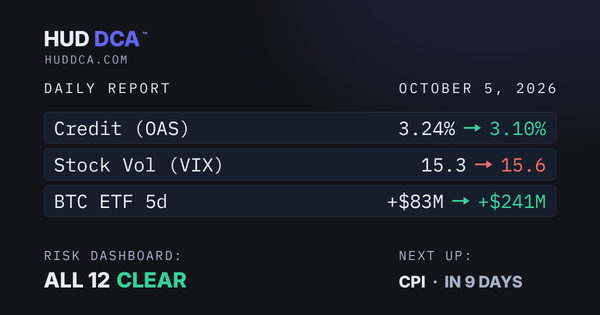
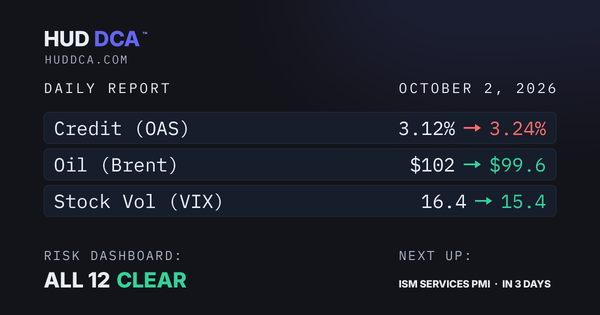
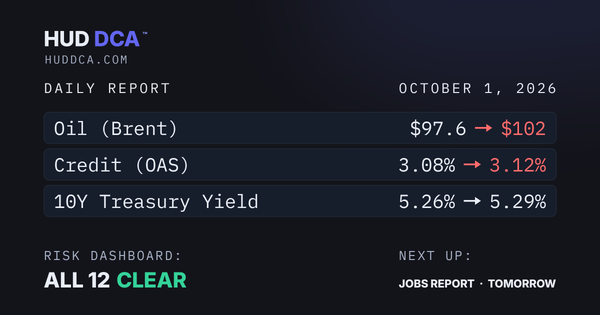
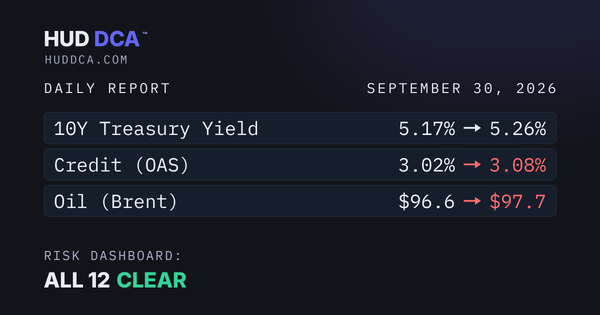
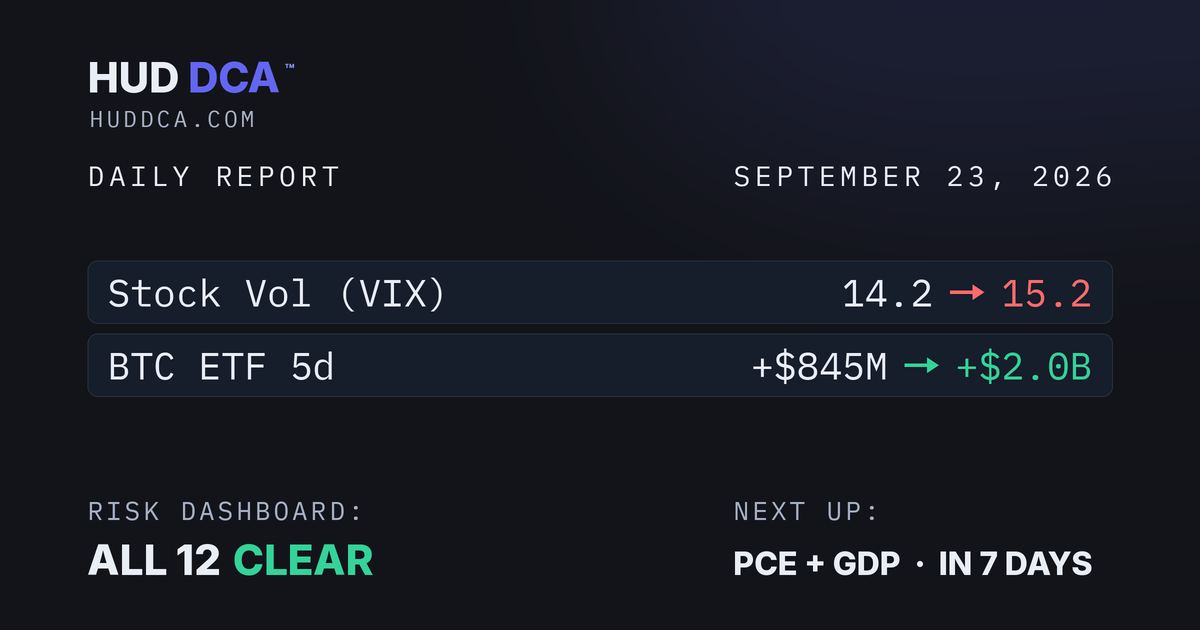
Institutional buyers poured $2.0B into spot Bitcoin ETFs over the last five days, and the risk dashboard is clear of any alert lines today. Meanwhile, Bitcoin cooled off 2.3% to $84,280 but remains extended 19% above its long-term average.

What is this?
PCE: the Personal Consumption Expenditures price index, from the Bureau of Economic Analysis.
What it is: Another measure of inflation, built from what households actually spend their money on.
Why it matters: It is the inflation measure the Federal Reserve officially targets. The Fed’s goal is 2% a year.
How to read it: Readings well above 2% mean inflation is still above the Fed’s goal, which makes rate cuts less likely.
GDP: Gross Domestic Product, from the Bureau of Economic Analysis.
What it is: The total value of everything the U.S. produced over three months: the broadest scorecard of the economy. Each quarter is published three times as more data comes in (advance, second and final).
Why it matters: It answers the biggest question: is the economy growing or shrinking?
How to read it: It is shown as a yearly growth rate. Around 2% is a typical pace for the U.S.; below zero means the economy shrank that quarter.
Fiscal year end: the end of the U.S. government’s budget year, on September 30.
What it is: The federal budget year closes on the same day the quarter ends, when many large funds rebalance their holdings.
Why it matters: Rebalancing can cause bigger-than-usual money flows in stocks and Bitcoin ETFs for a day or two. If Congress has not approved new spending by then, a government shutdown can start, which can delay official data releases.
How to read it: Unusual moves around quarter-end can be mechanical rather than a real change in the outlook.
ISM Manufacturing PMI10:00 AM ETOct 1
ISM Manufacturing PMI: a monthly survey from the Institute for Supply Management. PMI stands for Purchasing Managers’ Index.
What it is: Every month, the people who buy supplies for hundreds of U.S. factories say whether their orders, production, hiring and prices went up or down. The answers roll up into one number.
Why it matters: Factories feel changes in demand early, so this is one of the first signs each month of whether the economy is speeding up or slowing down.
How to read it: Above 50 means factories are growing; below 50 means they are shrinking. The further from 50, the stronger the move.
Jobs Report8:30 AM ETOct 2
Jobs report: the official monthly jobs count from the Bureau of Labor Statistics, often called payrolls or NFP (nonfarm payrolls).
What it is: How many jobs U.S. employers added or cut last month, plus the unemployment rate: the share of people who want a job but do not have one.
Why it matters: Jobs drive paychecks and spending. The Federal Reserve watches this closely when it sets interest rates, and the unemployment rate feeds the Jobs (Sahm) row on the risk dashboard.
How to read it: Compare it with the forecast. Far fewer jobs than expected, or a rising unemployment rate, can be an early sign of a slowdown.
ISM Services PMI10:00 AM ETOct 5
ISM Services PMI: the same Institute for Supply Management survey, for service businesses.
What it is: Buyers at service companies such as stores, restaurants, banks, hospitals and shippers report whether business went up or down last month.
Why it matters: Services make up most of the U.S. economy. The survey’s prices section also shows whether businesses are paying more, an early clue about inflation.
How to read it: Above 50 means the service sector is growing; below 50 means it is shrinking.
Risk dashboard
All 12 indicators are clear of their alert lines. Stock-market fear (the VIX) rose from 14.2 to 15.2, moving toward its alert line (alert above 35). Bitcoin ETF flows rose from +$845M to +$2.0B, moving away from its alert line (alert below -$500M). Closest to its alert line: Oil (Brent) at $98 (caution > $110 · alert above $135).