June 17, 2026
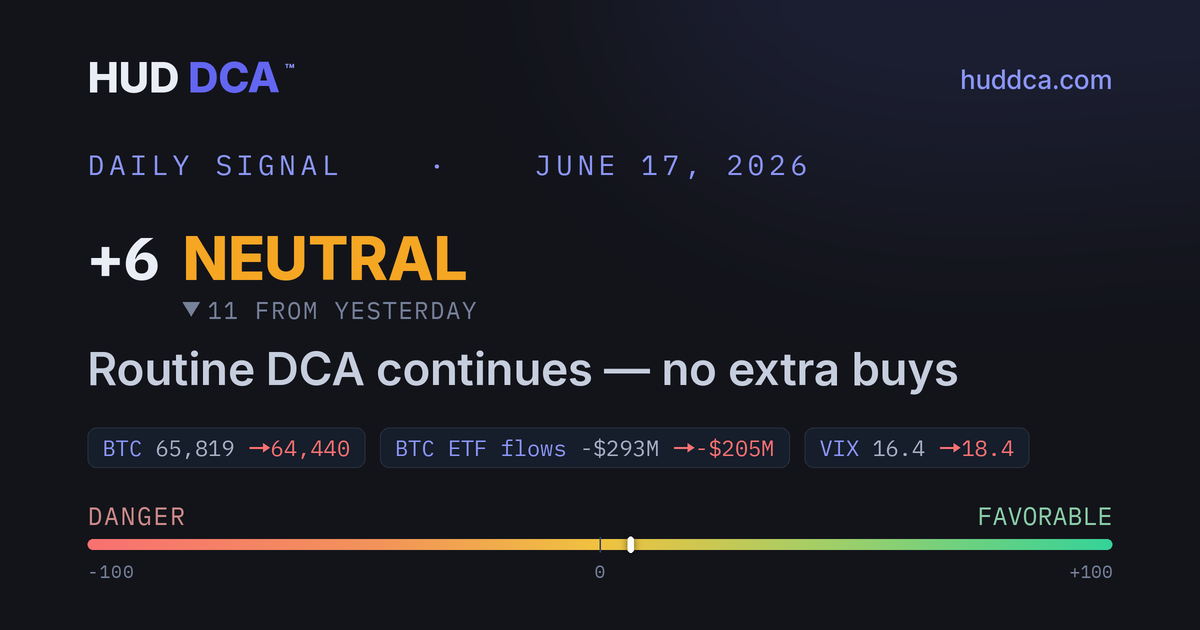
The Fed just turned hawkish, with new chair Kevin Warsh breaking a 14-year tradition by withholding his own rate forecast. A market that's steadying, not yet turning. Crypto sentiment is buried in extreme fear and Bitcoin reads undervalued — historically a patient buyer's setup
Today’s analysis
Read the full breakdown
- The setup is the classic contrarian one. The Crypto Fear & Greed Index — a 0–100 gauge where low means panic — is buried in “extreme fear,” and an on-chain valuation measure called MVRV (Market Value to Realized Value, which compares Bitcoin’s price to what the average holder actually paid) reads undervalued. Corporate credit is calm too: the OAS (Option-Adjusted Spread, the extra yield risky companies must pay to borrow) sits low, a sign Wall Street isn’t smelling trouble. Washed-out sentiment paired with an undervalued reading has, historically, marked better places to keep buying than moments of euphoria.
- The bigger-picture backdrop is still supportive. The money supply (M2, the broad measure of dollars in the system) is expanding again, which has historically lifted crypto with a lag, and oil sits near multi-month lows, which points to cooler inflation ahead. The catch is timing: the Federal Reserve just signaled it’s in no hurry to ease (more on that under Risks), so treat this as a tailwind at your back rather than a green light to rush.
- The Federal Reserve (the Fed, America’s central bank) left interest rates unchanged, as expected — but the tone turned hawkish. Its updated rate forecast, the “dot plot,” erased the rate cut markets had penciled in for this year and now shows officials open to a hike, with inflation still running hot. The headline twist: new chair Kevin Warsh declined to submit his own forecast at all — breaking a 14-year tradition and signaling he wants the Fed to telegraph less about its next move. Because lower rates tend to help riskier assets like crypto, the easing tailwind investors were hoping for is off the table for now.
- The chart is still soft. Bitcoin remains below its 200-day average (the average price over the last 200 days, a line traders use to read the broader trend), so the downtrend isn’t clearly over — and in stretches like this, “altcoins” (everything that isn’t Bitcoin) usually have a tougher time while Bitcoin leads any recovery. Adding to the caution, the US spot Bitcoin ETFs (Exchange-Traded Funds that let people hold Bitcoin as easily as a stock) are still seeing money leave, so the big institutions haven’t stepped back in yet.
- June 25 brings PCE (Personal Consumption Expenditures), the inflation gauge the Fed watches most closely, alongside the final read on first-quarter GDP (Gross Domestic Product, the broadest measure of economic output). After today’s hawkish turn, this print matters more than usual: a hot number would harden the case for a rate hike later this year, while a soft one would give the doves something to point to.
- Two more dates close out the month. June 30 is quarter-end, when large funds rebalance and Bitcoin ETF flows can swing on the institutional reshuffle. Then on July 1, the EU’s MiCA rules (Markets in Crypto-Assets, Europe’s sweeping crypto-regulation framework) take full effect — a long-telegraphed milestone for how digital assets are governed across the continent.